Before your visit: how to prepare
The days leading up to a first ketamine infusion can bring a mix of anticipation and uncertainty. That is completely normal. The good news is that preparation is simple, and knowing what to expect ahead of time tends to make the whole experience feel more grounded.
- Fasting: Do not eat for 4 to 6 hours before your appointment. Small sips of water are fine. This is a standard safety precaution for any IV sedation and helps prevent nausea.
- Medications: Take your regular medications as prescribed, with one important exception — benzodiazepines (such as Xanax, Ativan, or Klonopin) can interfere with how ketamine works. If you take one of these, let us know ahead of time so we can advise you on timing.
- What to wear: Comfortable, loose clothing. Think yoga clothes, not business casual. You will be reclining for about an hour, so dress for comfort. We also recommend short sleeves or a top with sleeves that roll up easily for IV access.
- Arrange a ride home. This is not optional. Ketamine affects coordination and perception for a period after treatment, and you cannot safely drive. A trusted friend, family member, or rideshare works perfectly.
- Set an intention (optional): Some patients find it meaningful to spend a few quiet minutes beforehand reflecting on what they hope to explore or release during treatment. A brief journal entry or even a single sentence can serve as a gentle anchor for the session.
Quick Prep Checklist
- No food 4-6 hours before (water is OK)
- Hold benzodiazepines — ask us about timing
- Wear comfortable, loose clothing
- Ride home arranged
- Optional: journal your intention
When you arrive at Music City Ketamine
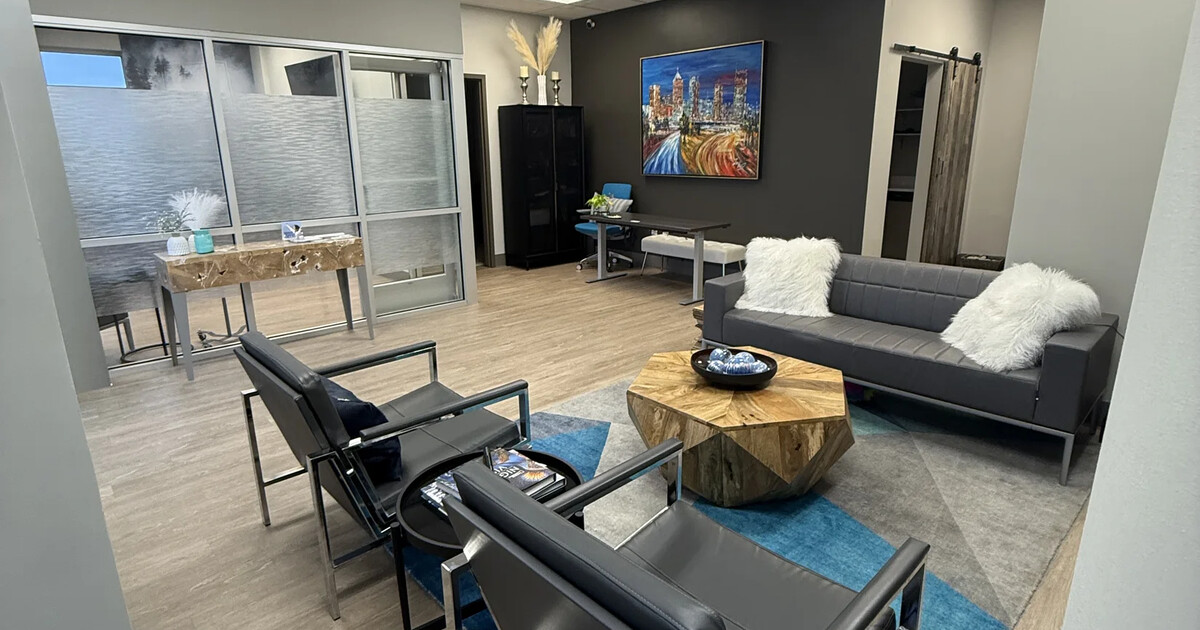
The first thing most patients notice is that our space does not look or feel like a clinic. We designed it that way on purpose. The atmosphere is quiet, warm, and spa-like — think soft lighting, calm music, and a welcoming coffee bar. We want you to start settling in from the moment you walk through the door.
You will meet Marla Peterson, CRNA, who oversees every infusion. Before anything begins, Marla will sit down with you to review your medical history, talk through your goals for treatment, and answer every question you have. There is no rush. This conversation matters, and we give it the time it deserves.
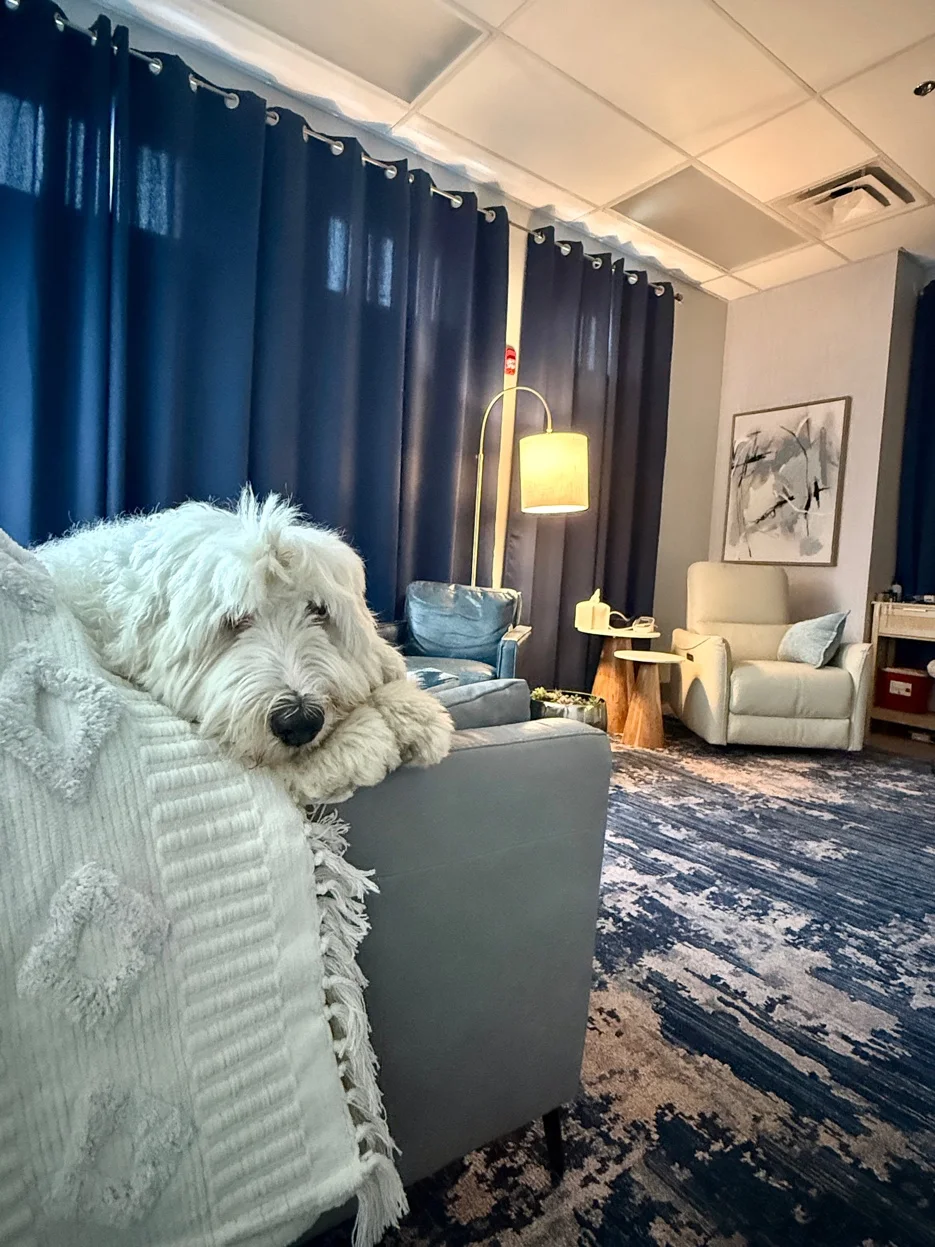
You may also be greeted by Walter White and Wilma, our therapy dogs. They are a calm, gentle presence in the space, and if you would like their company during your session, they are happy to sit with you. If you prefer quiet time alone, that is equally welcome. They're here because people relax faster when something feels safe.
Your treatment takes place in a private suite equipped with a comfortable recliner, a weighted blanket, an eye mask, and soft background music. Everything is set up so you can simply settle in and let go. You can learn more about our clinical setting and approach on our how it works page.

During the infusion: 40 to 60 minutes
Once you are comfortable in your suite, Marla will place a small IV — a quick pinch that takes just a few seconds. From there, the ketamine is administered slowly through the IV line, and the experience unfolds gradually.
Here is what most patients describe:
- The first few minutes: A gentle wave of relaxation. Some people notice a subtle warmth spreading through their body. Muscles that have been holding tension begin to soften.
- As the infusion continues: A mild dissociative quality may emerge. Time may feel like it is moving differently — stretching or condensing. Thoughts may drift in a way that feels fluid rather than structured. Some patients describe gentle visual impressions behind closed eyes.
- The overall quality: Dreamlike rather than frightening. Most patients describe the experience as deeply restful, even peaceful. It is not like being "out of it" — you remain aware that you are in a safe space being cared for, even as your perception shifts.
Your vital signs are continuously monitored with hospital-grade equipment. Your heart rate, blood pressure, and oxygen levels are tracked continuously. You can communicate at any point during the infusion — you are continuously monitored, and Marla can adjust the infusion rate at any time based on how you are feeling.
Every person's experience is a little different, and your own may vary from session to session. There is no "right" way to experience a ketamine infusion. The only thing we ask is that you try to be open to whatever arises.
After the infusion
When the infusion is complete, you will remain in your private suite for about 15 to 20 minutes while the effects gently fade. Most patients feel grounded and present within about 15 minutes. Some describe a lingering sense of calm or emotional openness.
A few things to keep in mind for the rest of your day:
- Your ride home. Your designated driver can pick you up or meet you in our space. You cannot drive for the remainder of the day.
- Rest. Plan to take it easy. This is not a day for errands, decisions, or screens. Give your brain and body the space to integrate what just happened.
- The neuroplastic window begins. Ketamine triggers a period of heightened brain plasticity — a window when your brain is forming new connections more readily. Journaling, quiet reflection, or simply resting are all valuable ways to support this process. We have written a full guide on the neuroplastic window if you would like to learn more.
- Timing of relief varies. Some patients feel noticeably lighter or more open on the same day as their first infusion. Others begin to notice changes over the next few days, or across the first few sessions. Both experiences are normal. You can read more about typical timelines in our post on how many ketamine sessions you may need.
What to do in the days following
The period after your first infusion is a quiet opportunity. Your brain is in a more receptive state, and the choices you make in the next few days can help reinforce the changes ketamine sets in motion.
- Schedule therapy if you have a therapist. A session within 24 to 48 hours of your infusion is ideal. During the neuroplastic window, the brain may be more open to processing difficult emotions and forming new perspectives. If you do not currently have a therapist, that is OK — journaling and reflection can serve a similar purpose.
- Journal. Even a few sentences about what you experienced, what surfaced, or how you feel can be valuable. You may notice new thoughts or emotional shifts that are worth capturing.
- Gentle movement. A walk outside, some light stretching, or slow yoga can support the integration process. Nothing intense — the goal is movement that feels nourishing.
- Prioritize sleep. Sleep is when the brain consolidates new connections. Give yourself a full night of rest and keep your environment calm.
- Avoid alcohol. Alcohol can interfere with the neuroplastic process that makes ketamine effective. We recommend avoiding it for at least 72 hours after your infusion.
- Note any changes. Pay attention to shifts in mood, thought patterns, sleep quality, or how you relate to the people and situations around you. These observations are valuable to share at your next session with Marla so we can tailor your treatment plan.
For a deeper look at integration strategies, our post on making the most of the neuroplastic window covers specific practices in detail.