This Isn't a
Big-Box Clinic
We built the place we'd want to walk into on the hardest day of our lives. Warm. Quiet. Human.
We built the place we'd want to walk into on the hardest day of our lives. Warm. Quiet. Human.
For more than twenty years, Marla Peterson has been putting people to sleep — and bringing them safely back. As a Certified Registered Nurse Anesthetist, she has managed thousands of cases in operating rooms, trauma bays, and labor-and-delivery suites across Middle Tennessee.
But it was outside the OR that she saw the crisis nobody was solving. Friends struggling with treatment-resistant depression. Veterans who had tried every medication on the market. Patients telling her, before surgery, that they almost didn't care if they woke up.
She kept hearing about ketamine — an anesthetic she'd administered countless times — showing remarkable results for depression, anxiety, PTSD, and chronic pain. Not in years. In hours. She studied the research, trained in IV ketamine protocols, and realized she didn't just want to offer this treatment. She wanted to build something different.
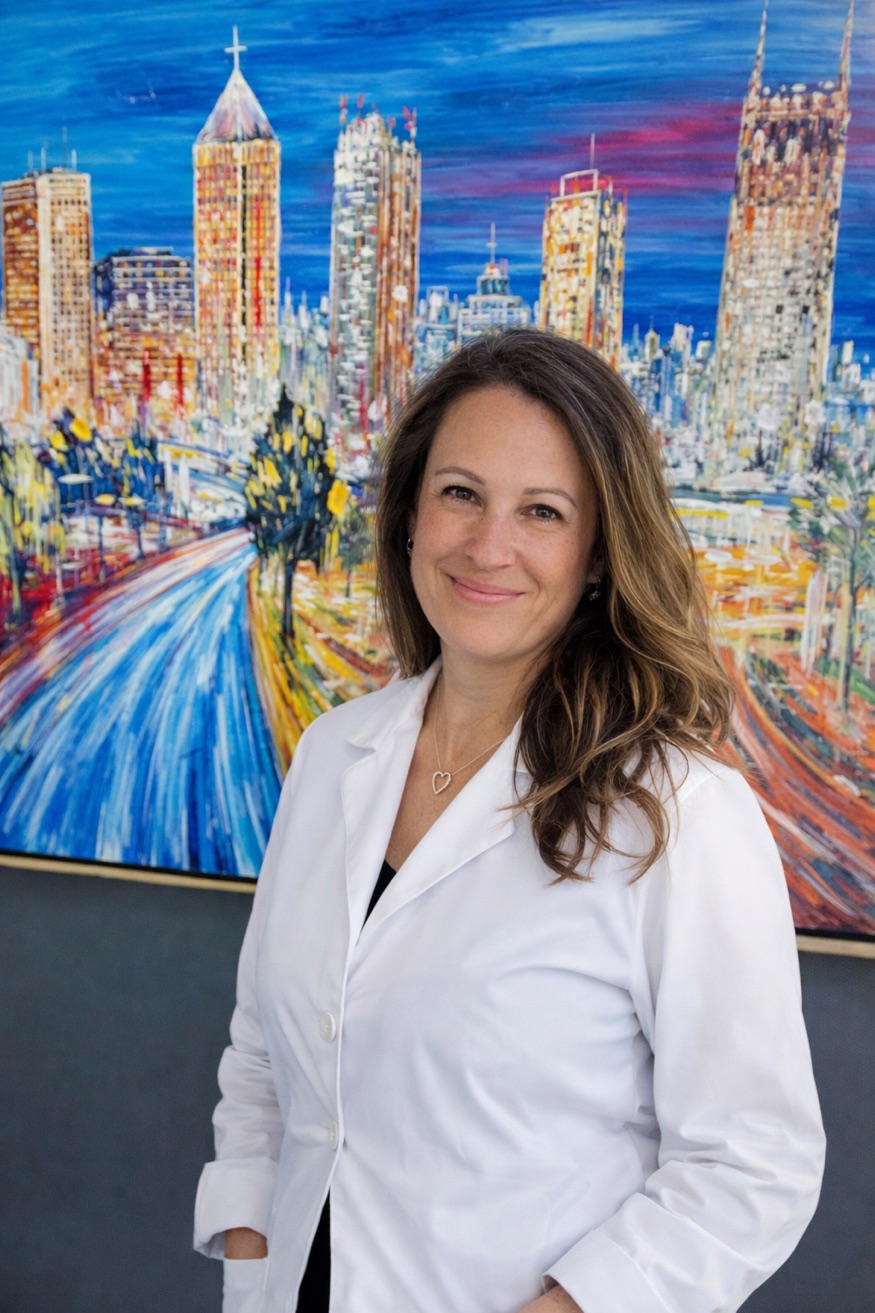
Marla didn't want to open a clinic that felt like a clinic. She'd seen how medical environments trigger anxiety in the very people who need help the most. So she started from scratch — not with exam tables and fluorescent lights, but with the question: What would make someone actually want to come back?
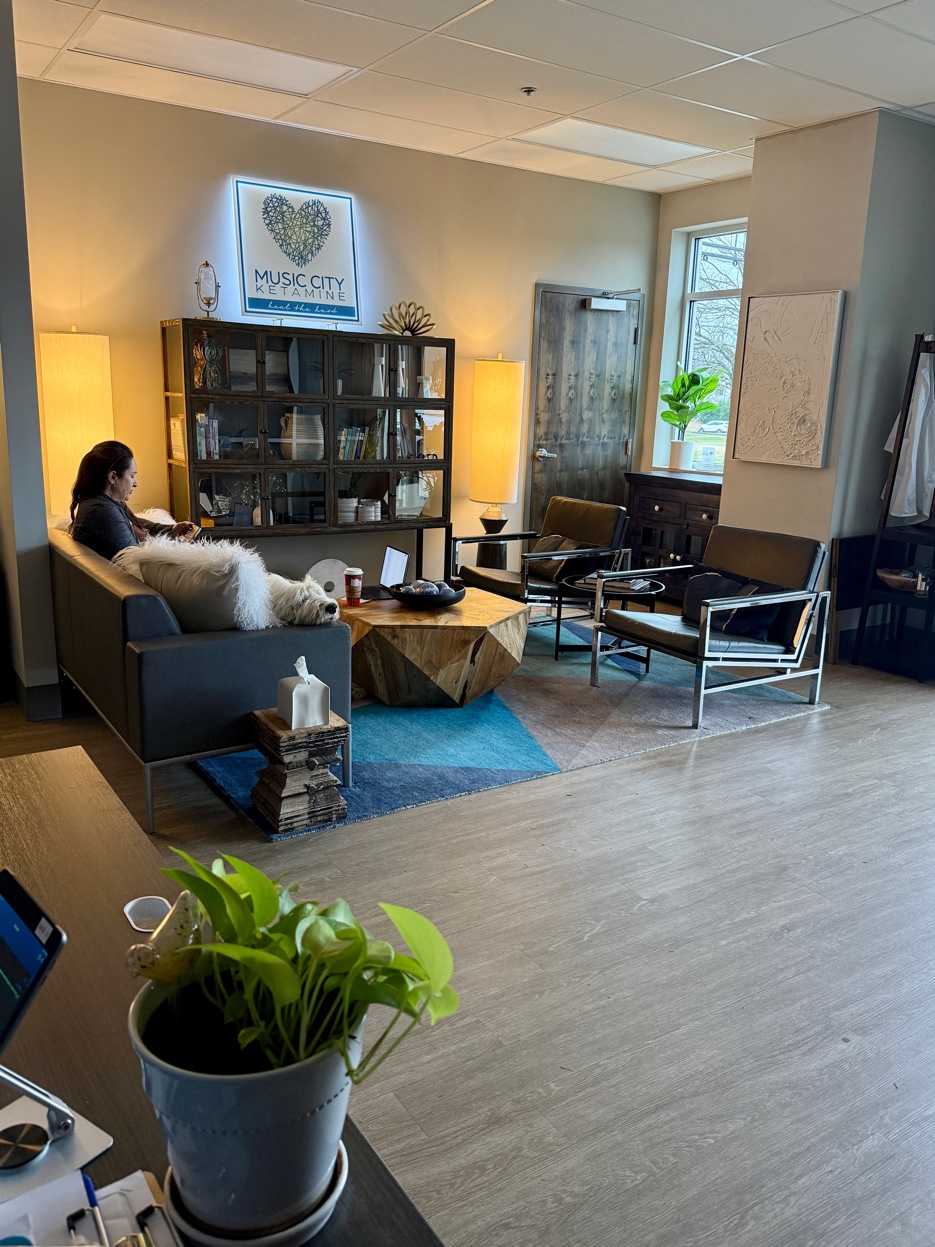
The answer was Music City Ketamine: a space built around warmth, safety, and genuine human connection. A place where the coffee is always on, the blankets are always weighted, and two very good dogs are always happy to see you.
Walk through our door and the first thing you'll notice is what's missing: no sterile smell, no harsh lighting, no clipboard-wielding front desk. Instead, you'll find a living room. A coffee bar. And probably a dog wagging its tail at you.
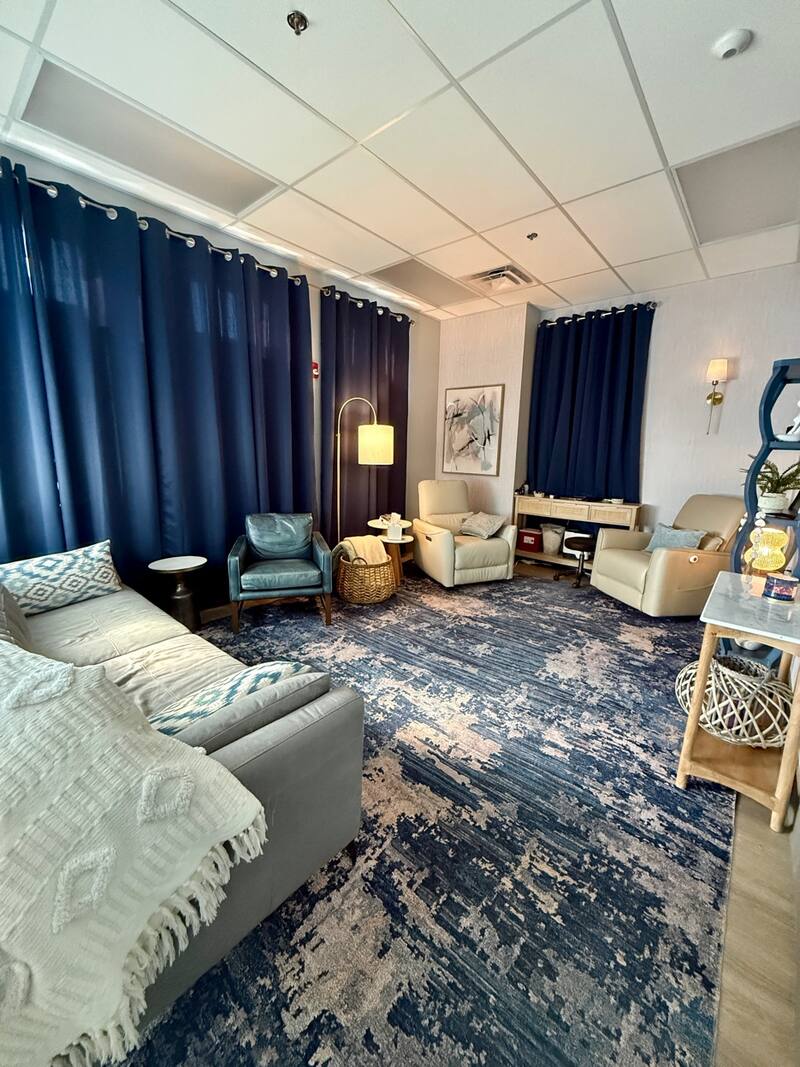
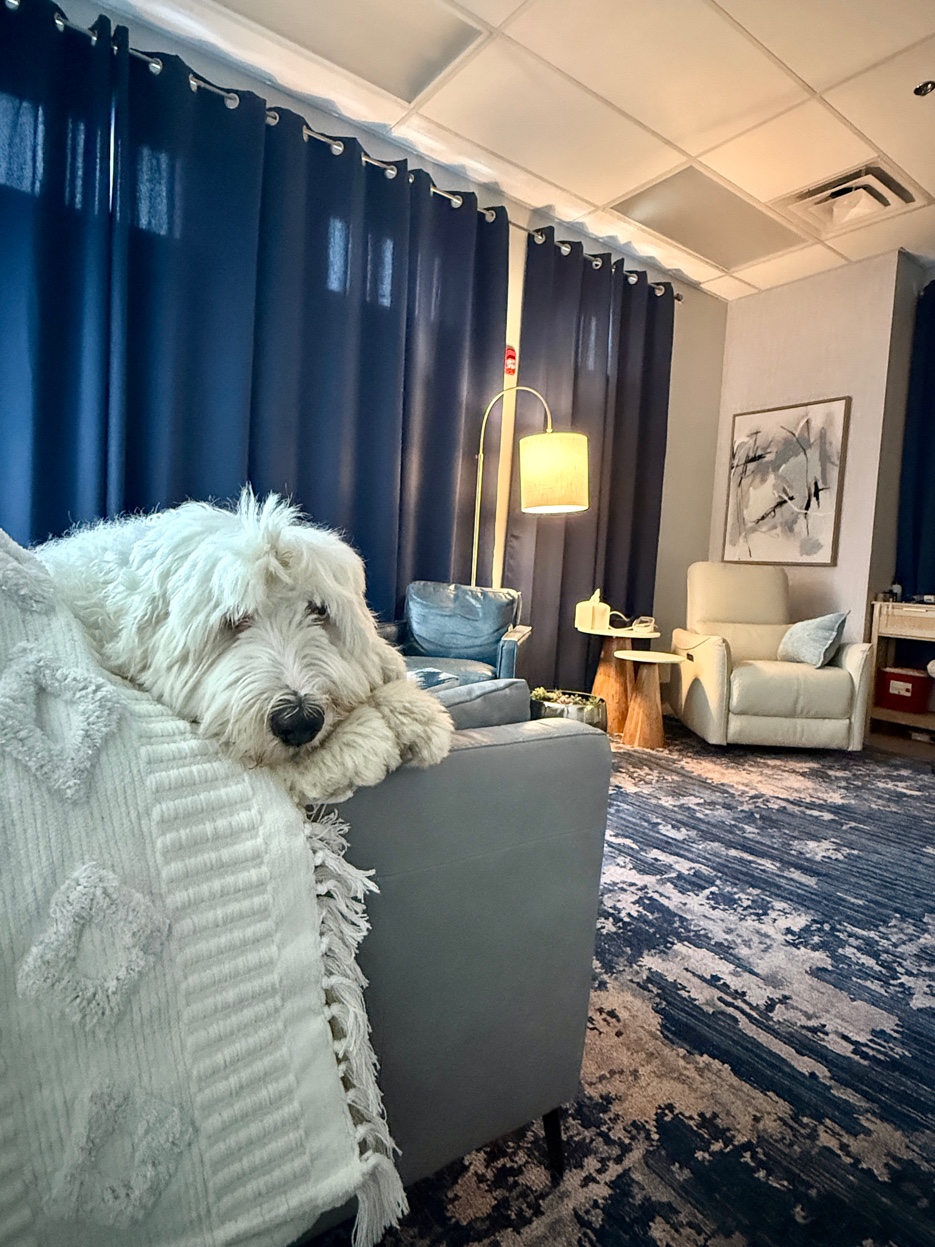
Every detail is intentional. The lighting is warm and adjustable. The treatment rooms have comfortable recliners, not hospital beds. You'll have a weighted blanket, noise-canceling headphones, and a curated music selection. The temperature is yours to control. The pace is yours to set.
This matters because the environment shapes the experience. When your nervous system feels safe, the therapy works better. It's that simple — and that important.
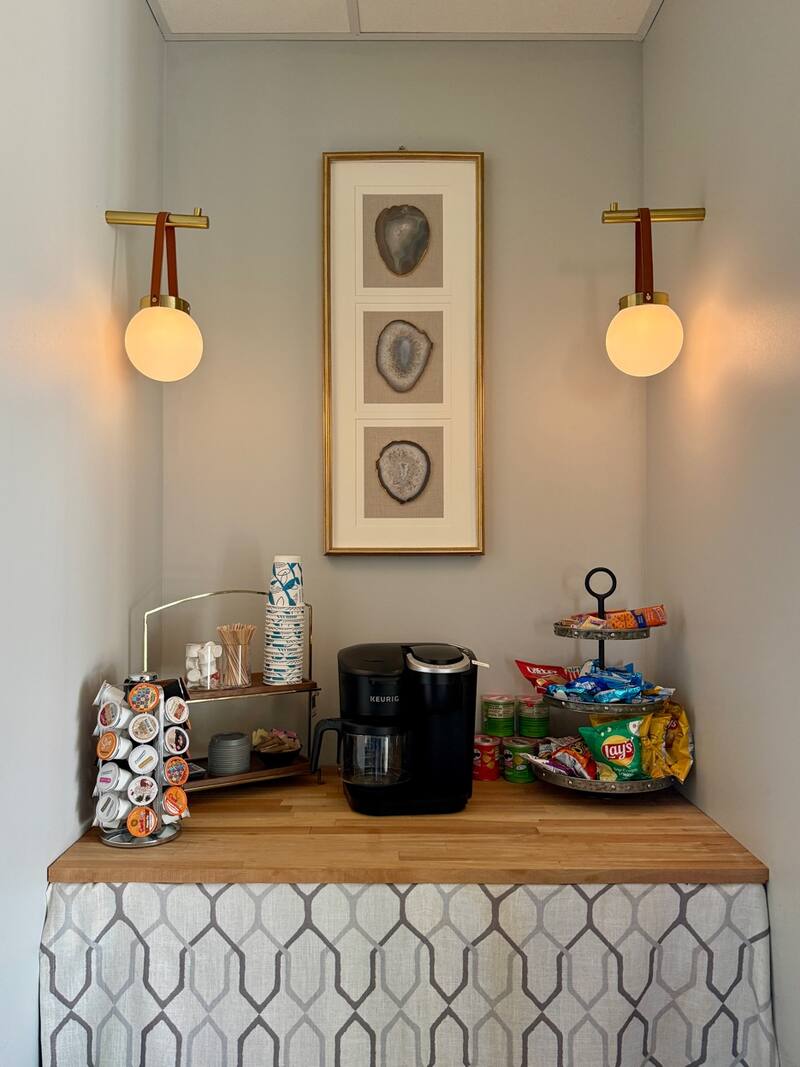
There are ketamine clinics popping up everywhere. Some of them run patients through like an assembly line — six recliners in one room, a nurse checking in every twenty minutes, a bill on your way out the door. That model works for the business. It doesn't work for the patient.
At Music City Ketamine, you are the only patient in the room. Your vitals are monitored continuously with the same equipment used in operating rooms, and Marla oversees your infusion, adjusting your dose in real time based on how you're responding.
We don't double-book. We don't rush. We don't hand you off to someone you've never met. This is one provider, one patient, one session at a time. It's less efficient. It's also why it works.
You'll never share a treatment room or compete for attention. Every session is private, unhurried, and fully monitored.
Continuous pulse oximetry, blood pressure, and cardiac monitoring — the same standard of care used in surgery.
Your dose is titrated to your response, not a one-size-fits-all formula. Marla adjusts throughout every session.
No packages you have to buy upfront. No memberships. Pay per session, and only continue if it's working for you.
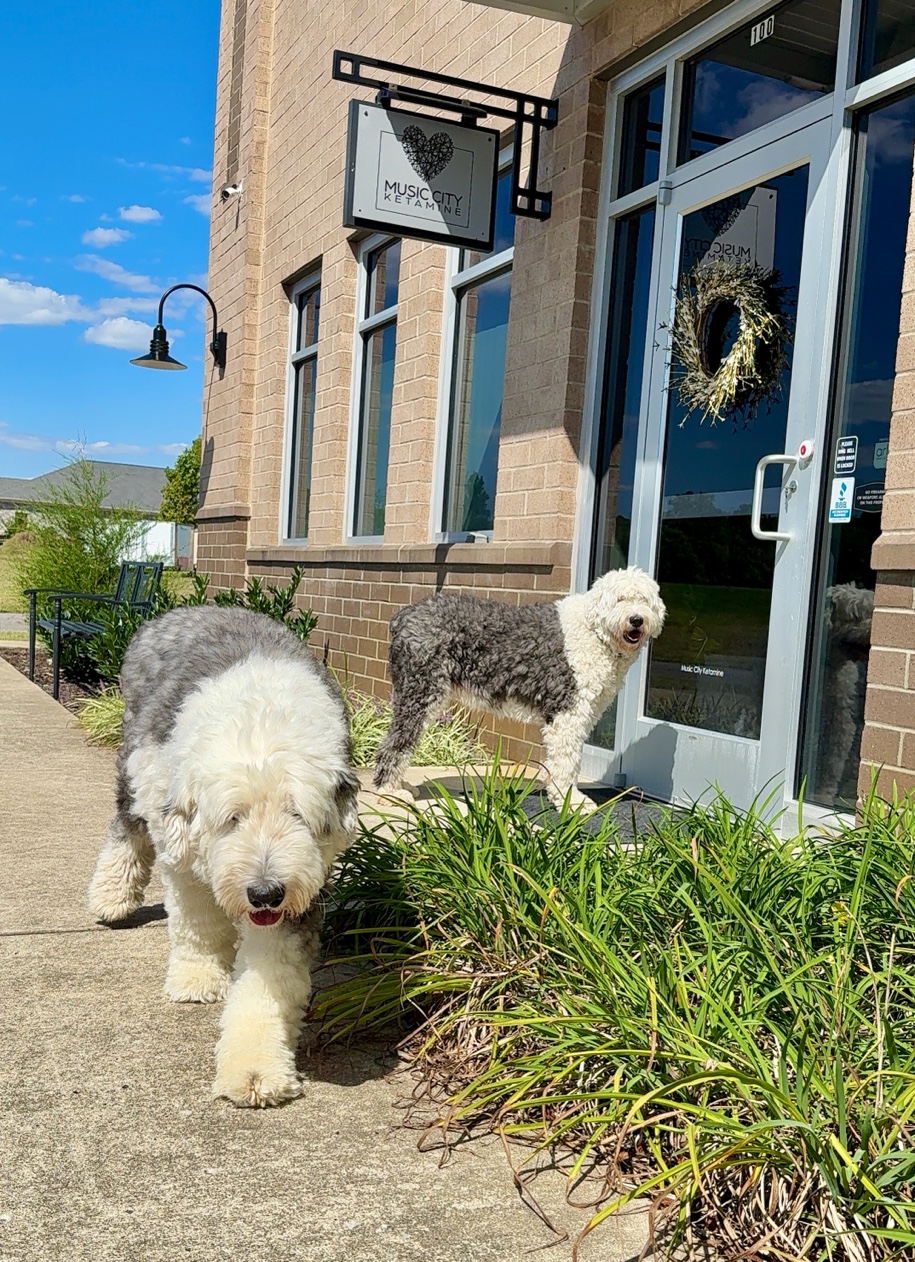
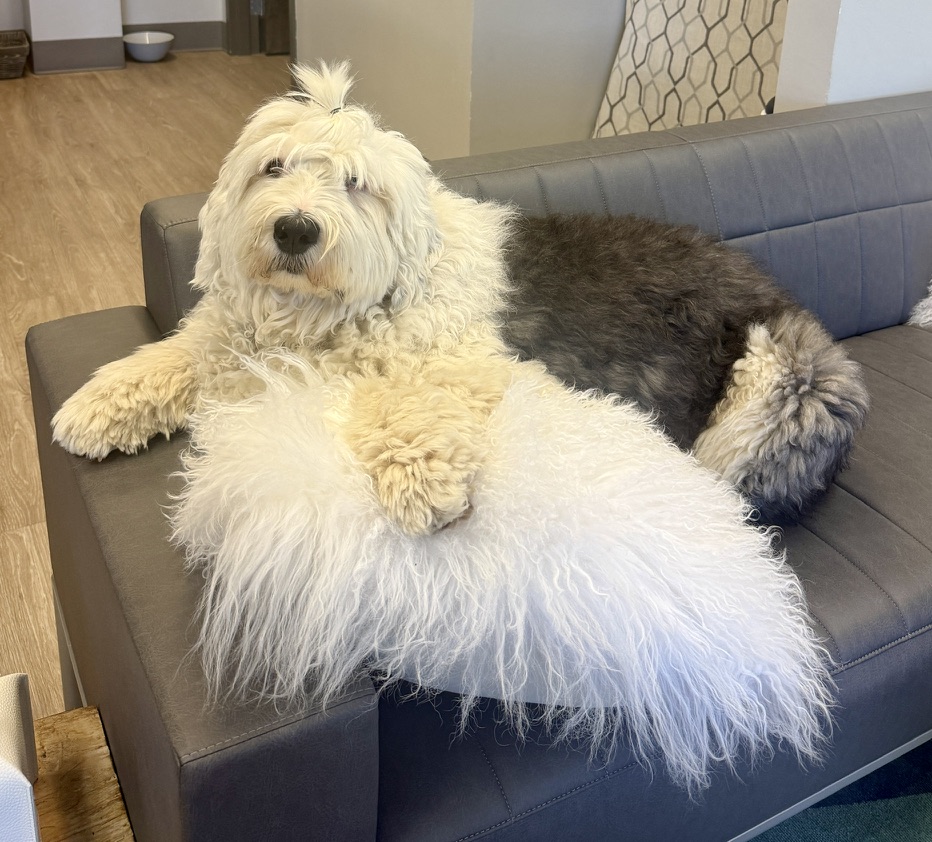
They're not trained therapy dogs in the clinical sense. They're just genuinely good dogs who happen to make people feel better — which, honestly, is the whole point.
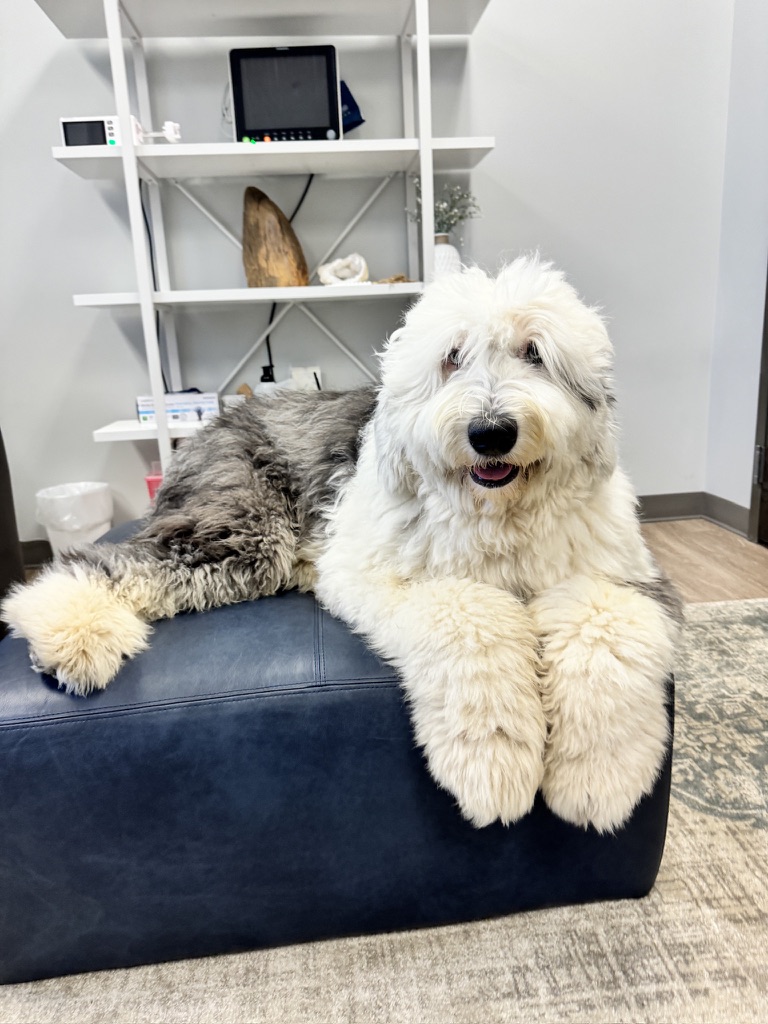
Walter White is the gentleman of the operation. He'll greet you at the door, check on you mid-session, and generally make you feel like you're the most important person who's ever walked in. He has a particular talent for knowing exactly when someone needs a nudge.
Wilma is the queen of the couch. She's more selective about her affection — but when she decides you're her person for the day, she'll curl up next to you and stay there until you're ready to go. Patients have told us she's the best part of the experience.
I was so nervous before my first session. Then Walter walked over and put his head on my lap, and I just... exhaled. It sounds silly, but he made the whole thing feel okay.Actual patient feedback
Research consistently shows that animal interaction reduces cortisol and increases oxytocin. But we didn't need a study to know that. We just needed to watch Walter White and Wilma do their thing.
They're here because people relax faster when something feels safe.
You don't have to decide today.