When every hour matters, ketamine can provide rapid relief from suicidal thoughts — in hours, not weeks. You are not beyond help.
Schedule a Conversation →If you are in immediate danger, please call 911 or go to your nearest emergency room.
988 Suicide & Crisis Lifeline — Call or text 988 — Available 24/7, free, and confidential.
Veterans Crisis Line: 988, then press 1 • Crisis Text Line: Text HOME to 741741
If you are experiencing suicidal thoughts, we want you to know something important: these thoughts are symptoms of a medical condition, not evidence of your character. They do not mean you are weak. They do not mean you are selfish. They mean your brain's pain-processing system has become overwhelmed, and the neural circuits responsible for hope, problem-solving, and future-orientation are not functioning the way they should.
Suicidal ideation exists on a spectrum. For some, it is a passive wish to not wake up. For others, it is an active, intrusive presence that narrows the world down to a single, terrible option. Wherever you fall on that spectrum, you deserve rapid, compassionate, evidence-based care.
The tragedy of suicidal ideation is that traditional treatments — the very medications designed to help — take weeks to reach therapeutic effect. When someone is in acute crisis, waiting four to eight weeks for an SSRI to work is not just frustrating. It can be dangerous. This is the gap that ketamine was made to fill.
The most remarkable finding in modern psychiatry may be this: a single sub-anesthetic dose of IV ketamine can significantly reduce suicidal thoughts within hours of administration. Not days. Not weeks. Hours.
Research has shown that ketamine's anti-suicidal effects are at least partially independent of its antidepressant effects. In other words, ketamine does not simply reduce suicidal thoughts by improving mood — it appears to directly target the neural circuitry that generates suicidal ideation. This is a critical distinction because it means ketamine can help even when depression itself has not yet fully resolved.
Suicidal thinking is associated with reduced connectivity in prefrontal brain regions responsible for cognitive flexibility, hope, and problem-solving. The brain becomes rigid, locked into a pattern where ending one's life seems like the only logical solution to unbearable pain. Ketamine rapidly promotes the growth of new synaptic connections in these exact regions, reopening the ability to see alternatives, to imagine a future, and to access reasons for living.
Emerging research suggests that suicidal ideation is driven by dysregulated glutamate signaling that creates a state of unbearable psychological pain — what clinicians call psychache. Ketamine modulates this glutamate dysfunction, reducing the intensity of psychological suffering rapidly enough to create a bridge to longer-term treatment and recovery.
We approach suicidal ideation with the gravity and compassion it deserves. There is no judgment here. There is no minimizing. There is no rush. When you reach out to us, you will be met with a team that understands the courage it takes to ask for help when you are in this kind of pain.
Marla Peterson, CRNA, APRN, brings years of anesthesia experience and a deeply human approach to every patient. She understands that someone experiencing suicidal ideation needs more than clinical competence — they need to feel genuinely seen and genuinely safe.
Your treatment plan will be coordinated with your existing mental health providers. Ketamine is not a standalone solution for suicidal ideation — it is a bridge that provides rapid relief while longer-term treatments and therapeutic relationships have time to take hold. We will work with your psychiatrist, therapist, or counselor to ensure continuity of care.
Treatment begins with a thorough evaluation. Marla will review your history, assess your current state, and determine if ketamine therapy is safe and appropriate for your situation. If you are a candidate, infusions can often begin quickly.
Each infusion lasts approximately 40 minutes. You will be in a private suite with continuous vital sign monitoring. The experience is typically calm and introspective. Afterward, you will rest in our recovery area before a loved one drives you home.
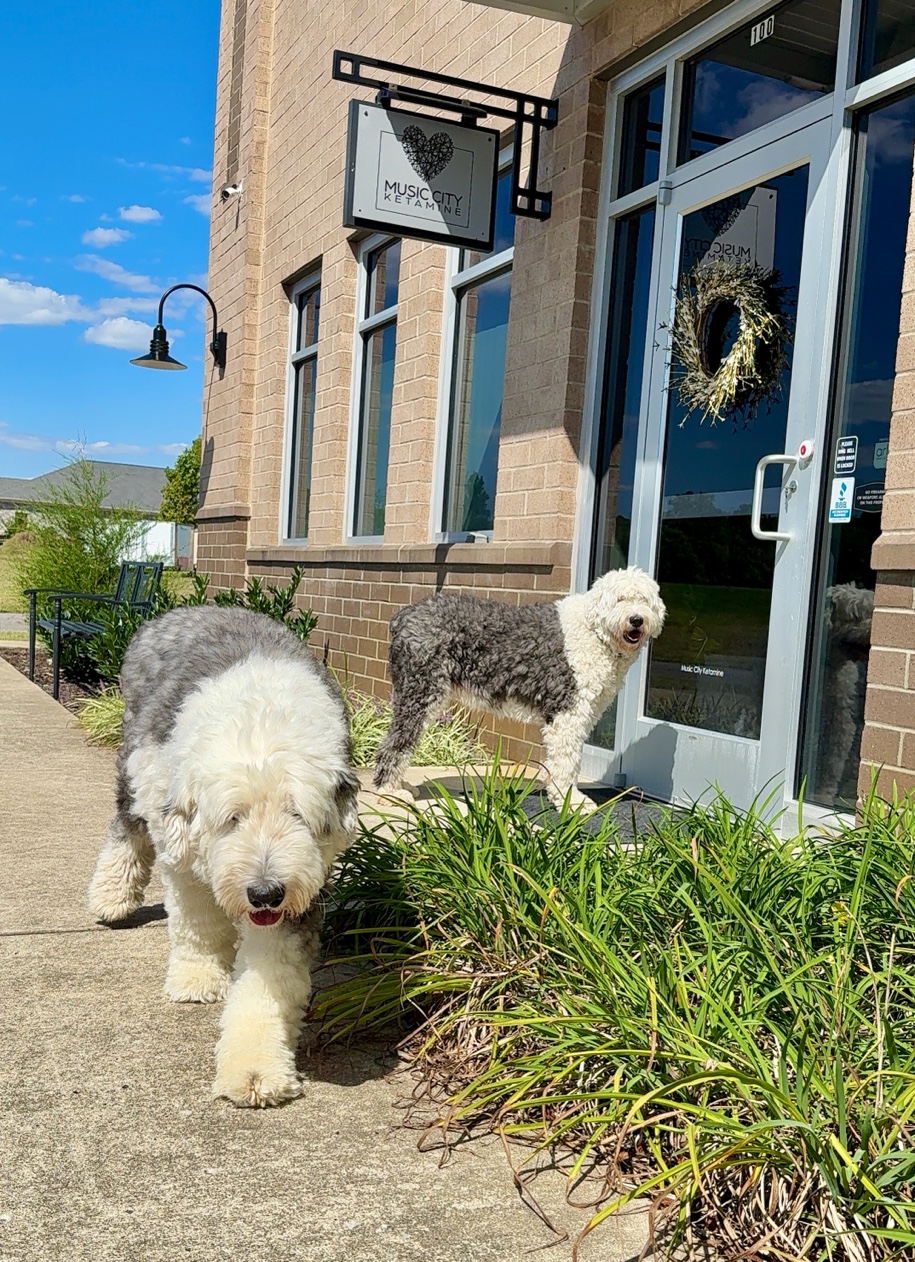
Our therapy dogs, Walter White and Wilma, are often present in the clinic. Many patients have told us that their gentle, quiet presence provides a comfort that is hard to put into words — especially during the most difficult moments.
If you or someone you love is in immediate danger, please do not wait. These resources are free, confidential, and available around the clock:
If you are not in immediate crisis but are experiencing suicidal thoughts and want to explore ketamine therapy as a treatment option, we are here for you. Reaching out is an act of strength.
You do not have to carry this alone. A confidential conversation with our team can help you understand whether ketamine therapy could provide the rapid relief you need.
Schedule a Conversation →Or call us directly: (615) 988-4600
If you are in immediate danger, call 911 or text 988