Music City Ketamine exterior sign in Franklin, Tennessee

You Served.
Now Let Us Serve You.

IV ketamine therapy for veterans living with PTSD, TBI-related depression, chronic pain, and the invisible wounds that followed you home.

Schedule a Conversation →
Anesthesia Professionals Hospital-Grade Monitoring Physician Oversight Rapid-Acting Treatment
Understanding the Challenge

The Wounds That Don't Show

You came home. But part of you didn't. Maybe it's the hypervigilance that won't shut off — scanning every room, every parking lot, every crowd. Maybe it's the nightmares that drag you back to places you thought you left behind. Maybe it's the numbness, the disconnect from the people you love most, the feeling that something fundamental changed and you can't get it back.

These are not signs of weakness. They are the neurological consequences of what you endured in service. PTSD, traumatic brain injury, chronic pain, treatment-resistant depression — these conditions physically alter the brain. And for too many veterans, the standard treatments simply are not enough.

If you have tried the VA medications, the talk therapy, the group sessions — and still feel stuck — you are not alone. An estimated 30% of veterans with PTSD do not respond adequately to first-line treatments. That is not your failure. That is a gap in the available options. Ketamine therapy may help fill it.

IV ketamine treatment room at Music City Ketamine
How Ketamine Helps

Rapid Relief for Service-Connected Conditions

IV ketamine works differently from conventional psychiatric medications. Instead of modulating serotonin or norepinephrine — which can take weeks to show effect and often come with difficult side effects — ketamine acts on the brain's glutamate system, the primary excitatory neurotransmitter network that governs learning, memory, and neural plasticity.

For veterans, this mechanism is particularly relevant across several service-connected conditions:

01 PTSD — Ketamine can rapidly reduce the intensity of intrusive memories, hyperarousal, and emotional numbing. Research shows it helps the brain process traumatic memories without the overwhelming emotional charge, creating space for therapeutic work.
02 TBI-Related Depression — Traumatic brain injuries disrupt neural connectivity in ways that make conventional antidepressants less effective. Ketamine's ability to promote synaptogenesis — the growth of new neural connections — directly addresses this structural damage.
03 Chronic Pain — Many veterans live with musculoskeletal pain, neuropathy, or complex regional pain syndromes from service. Ketamine modulates central pain sensitization and can reduce pain levels without the dependency risks of long-term opioid use.
04 Suicidal Ideation — Veterans face a suicide rate 1.5 times higher than non-veterans. Ketamine is one of the fastest-acting treatments available for acute suicidal thinking, often reducing ideation within hours rather than weeks.
By the Numbers

What the Research Shows

70%
Response Rate
For treatment-resistant PTSD symptoms
24
Hours to Relief
Rapid onset for depression and suicidal ideation
22
Veterans Lost Daily
To suicide — we are working to change that
30%
PTSD Non-Responders
Veterans who need options beyond first-line treatments
Beyond Standard Care

When You've Exhausted the Usual Options

The VA does extraordinary work for millions of veterans. We respect that deeply. But the reality is that VA mental health resources are stretched thin, wait times can be long, and the pharmacological toolkit available through the system has real limitations. If you have cycled through SSRIs, SNRIs, prazosin, and therapy protocols without meaningful improvement, you deserve to know that other options exist.

IV ketamine therapy is one of those options. It is not experimental — ketamine has been FDA-approved as an anesthetic since 1970 and has been used off-label for treatment-resistant depression and pain conditions for over two decades. The Department of Defense and VA have both funded research into ketamine for PTSD and suicidal ideation, and the results have been encouraging.

At Music City Ketamine, we work with veterans every week. We understand the unique clinical profile of service-connected conditions, and we approach every veteran's care with the gravity and respect it deserves. You are not just another patient here. You are someone who gave part of yourself for this country, and we intend to give you our absolute best in return.

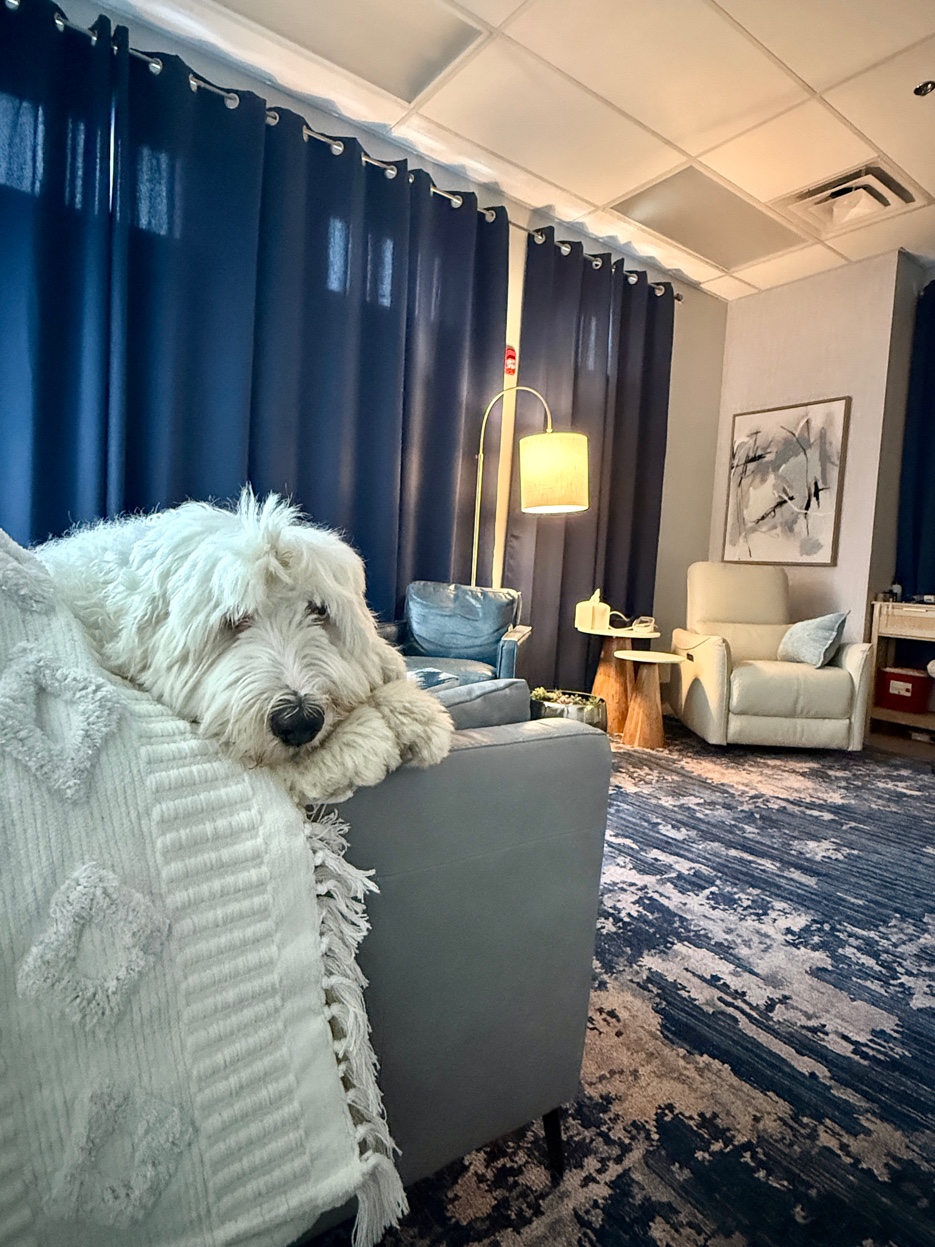
Wilma the therapy dog in the treatment room at Music City Ketamine
Your Experience

A Space That Feels Safe

We know that clinical environments can be triggering. The fluorescent lights, the sterile smell, the institutional feel — for many veterans, these sensations carry associations that work against healing rather than supporting it.

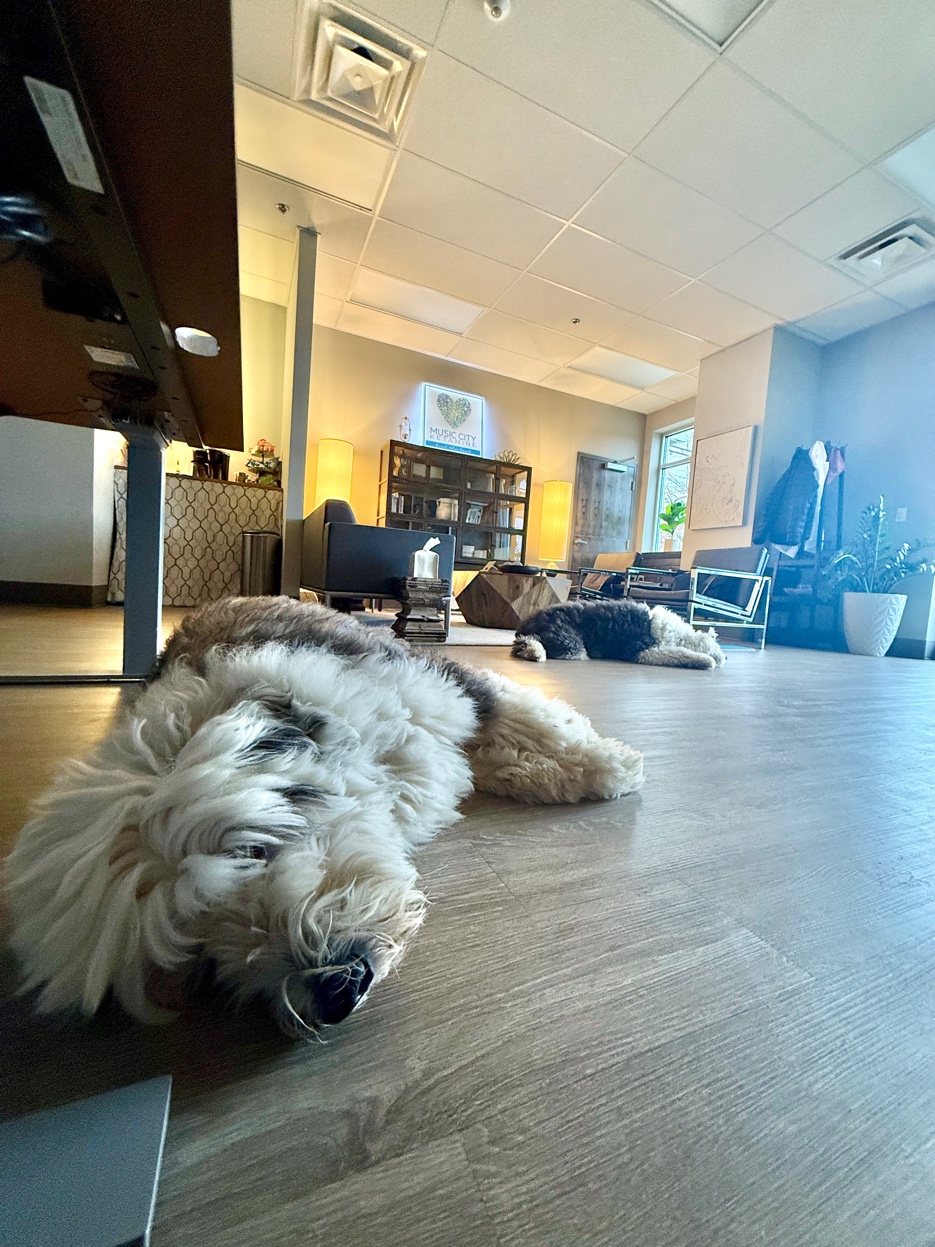
That is why Music City Ketamine looks and feels nothing like a hospital. Our clinic in Franklin was designed as a warm, quiet sanctuary. Private treatment suites. Soft lighting. Comfortable recliners. A coffee bar in the lobby. And two therapy dogs — Walter White and Wilma — who have an uncanny ability to sense when someone needs a calm presence nearby.

During your infusion, you will be continuously monitored by our anesthesia professionals with hospital-grade equipment. A typical session lasts 40 to 60 minutes. Many veterans describe the experience as the first time in years they felt their nervous system truly stand down — a deep, restful quiet that feels like coming home to a version of yourself you thought was gone.

We never rush. We never push. Your treatment plan is built around your specific conditions, your history, and your goals. We coordinate with your existing providers — whether that is a VA therapist, a private psychiatrist, or a recovery program — to ensure continuity of care.
Veteran Story
★★★★★
“I did three tours and spent eight years trying every medication the VA had. Nothing touched it. After my second ketamine infusion, I slept through the night for the first time since 2014. My wife noticed the difference before I did.”
Verified Patient U.S. Army Veteran • PTSD • Franklin, TN Google Review
Is This Right for You?

Ketamine May Help If You Are

A veteran or active-duty service member dealing with PTSD that has not responded to standard treatments
Living with depression or anxiety connected to a traumatic brain injury sustained during service
Managing chronic pain from service-connected injuries and looking for alternatives to long-term opioid use
Experiencing suicidal thoughts and need rapid-acting intervention while other treatments build up
Frustrated by VA wait times or limited options and ready to explore private-sector treatment
A family member seeking information on behalf of a veteran who is struggling — we welcome your call
Music City Ketamine coffee bar
heal the hurt
Take the Next Step

You Already Did the Hard Part.
Let Us Take It from Here.

You do not need a referral. You do not need to navigate a system. Just a conversation — direct, honest, and on your terms. We will answer every question and help you decide if ketamine therapy is right for your situation.
Schedule a Conversation →
Or call us directly: (615) 988-4600
Monday–Friday • By Appointment